Lets start with the images!
This was my best capture of the trip. Meteor m2-4 passed right overhead at around 80 degrees.
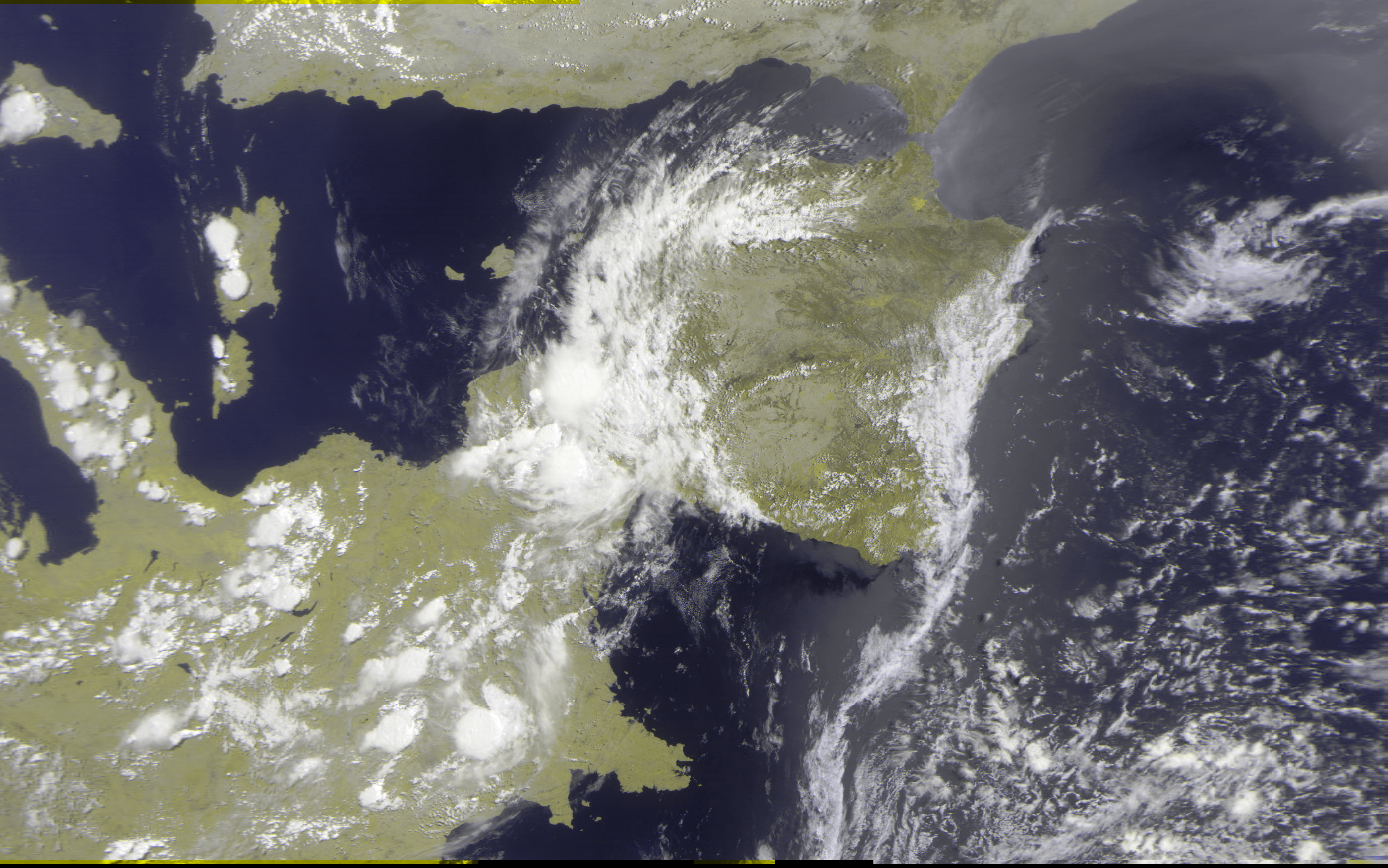
It took me 4 attempts to get anything usable due to my inexperience.
I started with gpredict and sdr++ (incorrectly configured) and my Dipole antenna pointing the wrong way!
The best I got was a black image, it hadn’t occured to me that earlymorning before sunrise = no light for the sat!
I then dove into the theory surrounding how antennas worked, why they resonate at certain frequencies, how to convert frequency to antenna length etc etc.
I learned that orientation is key to maximising the gain, pointing the V shape towards N/S so that the null regions lie outside of the satellite pass.
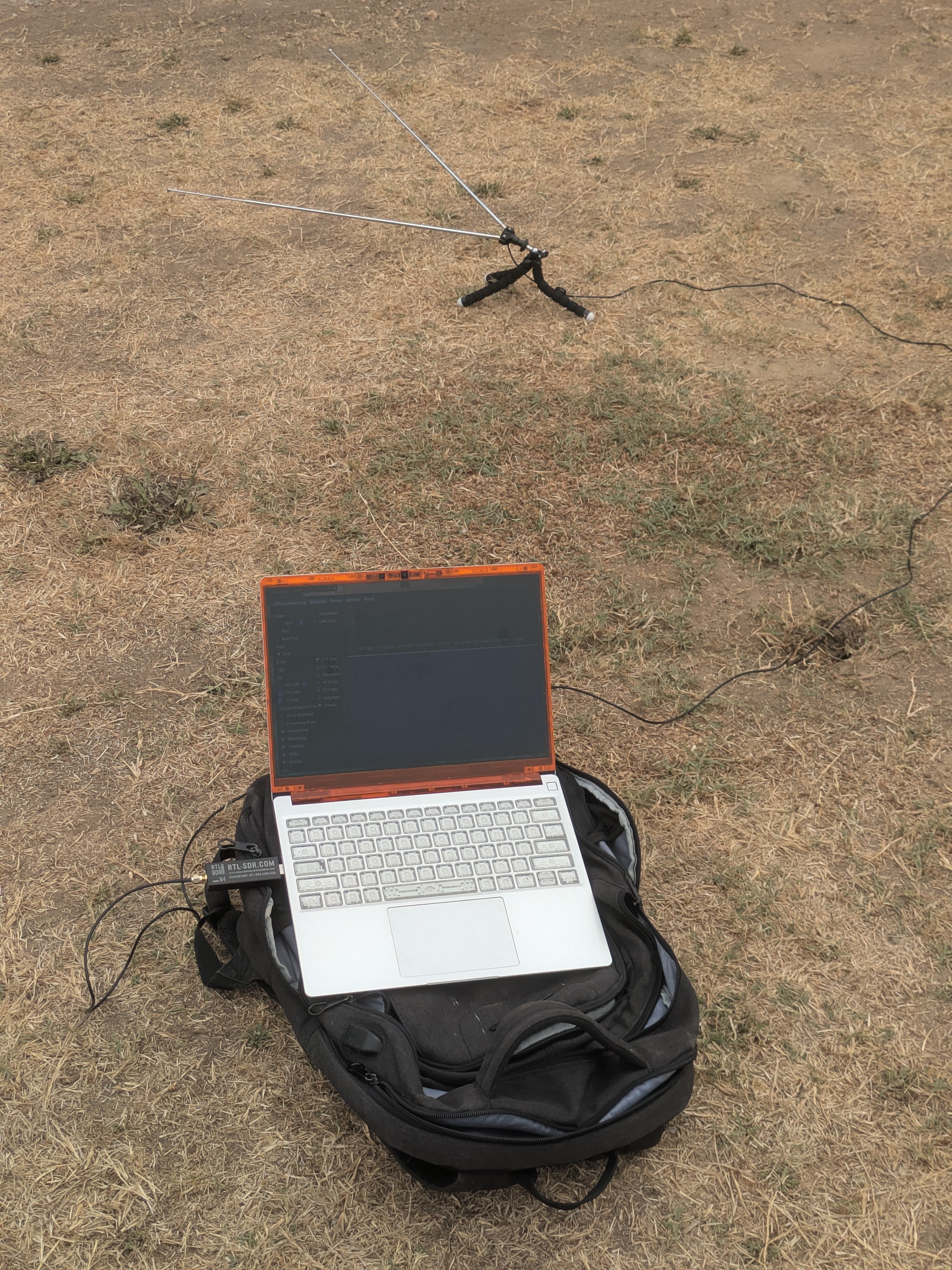
(40 minutes of YouTube lectures is far from sufficient, but im now encouraged to learn more!)
I then raced outside to capture m2-3 as my alarm blared warning me 5 minutes before the pass.
This was the result…
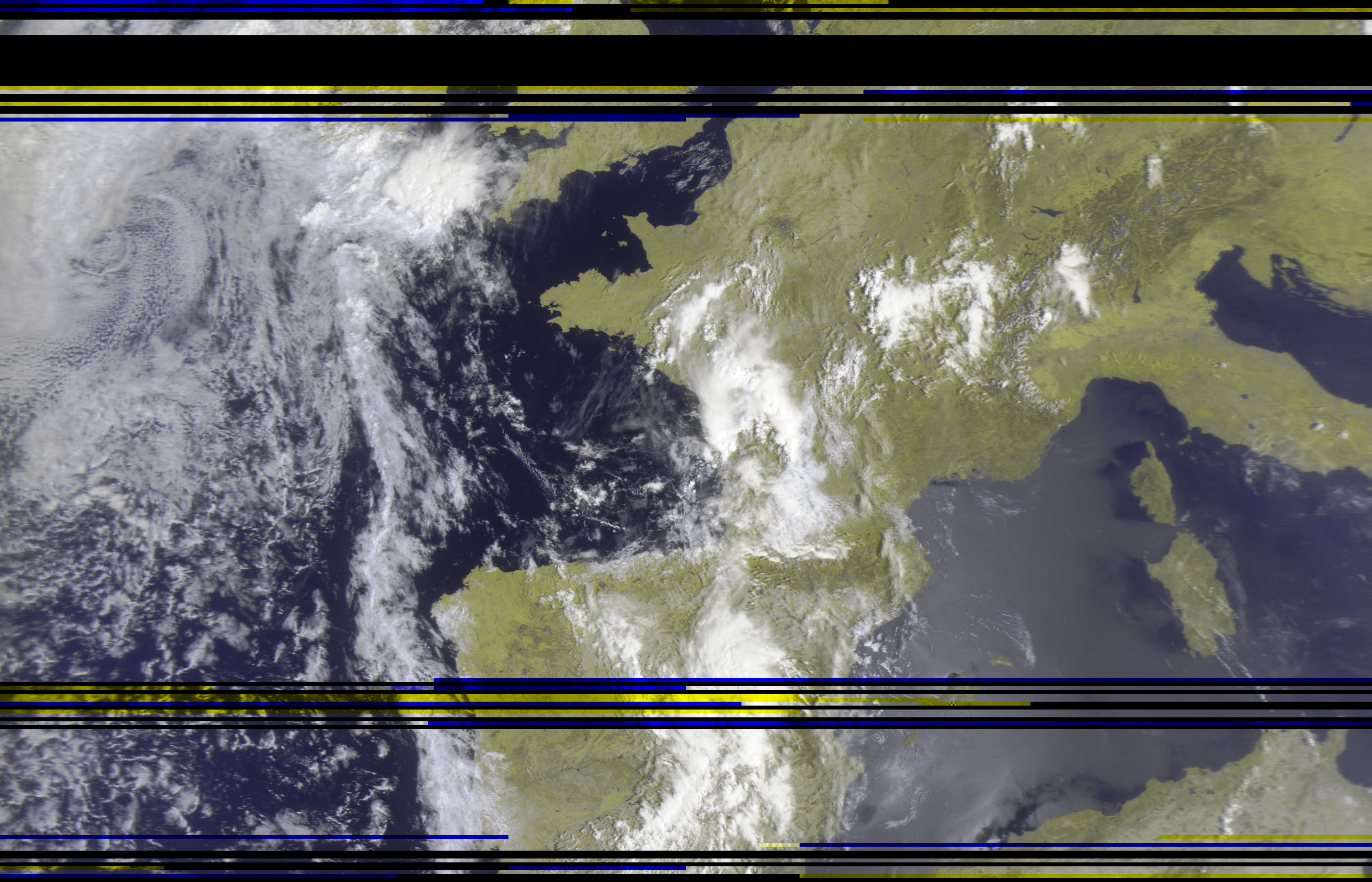
Pretty darn happy with it considering surroundings had tonnes of trees. Furthermore, apparently m2-3 has a slightly broken antenna making reception a bit more difficult
satdump
- Honestly just follow this guide , it was awesome. I built the latest release from source (I did not directly git clone)
- I tried satdump 2.0 alpha but guides don’t really cover it yet and was a little weird on my machine, back to 1.2.2
lookforsat
- On my phone, to help visualise and time the sat encounter.
- Its like a more polished version of gpredict. My favorite feature is the radar, I can point it at the sky to trace the satellites paths.
- Very handy for antenna orientation!